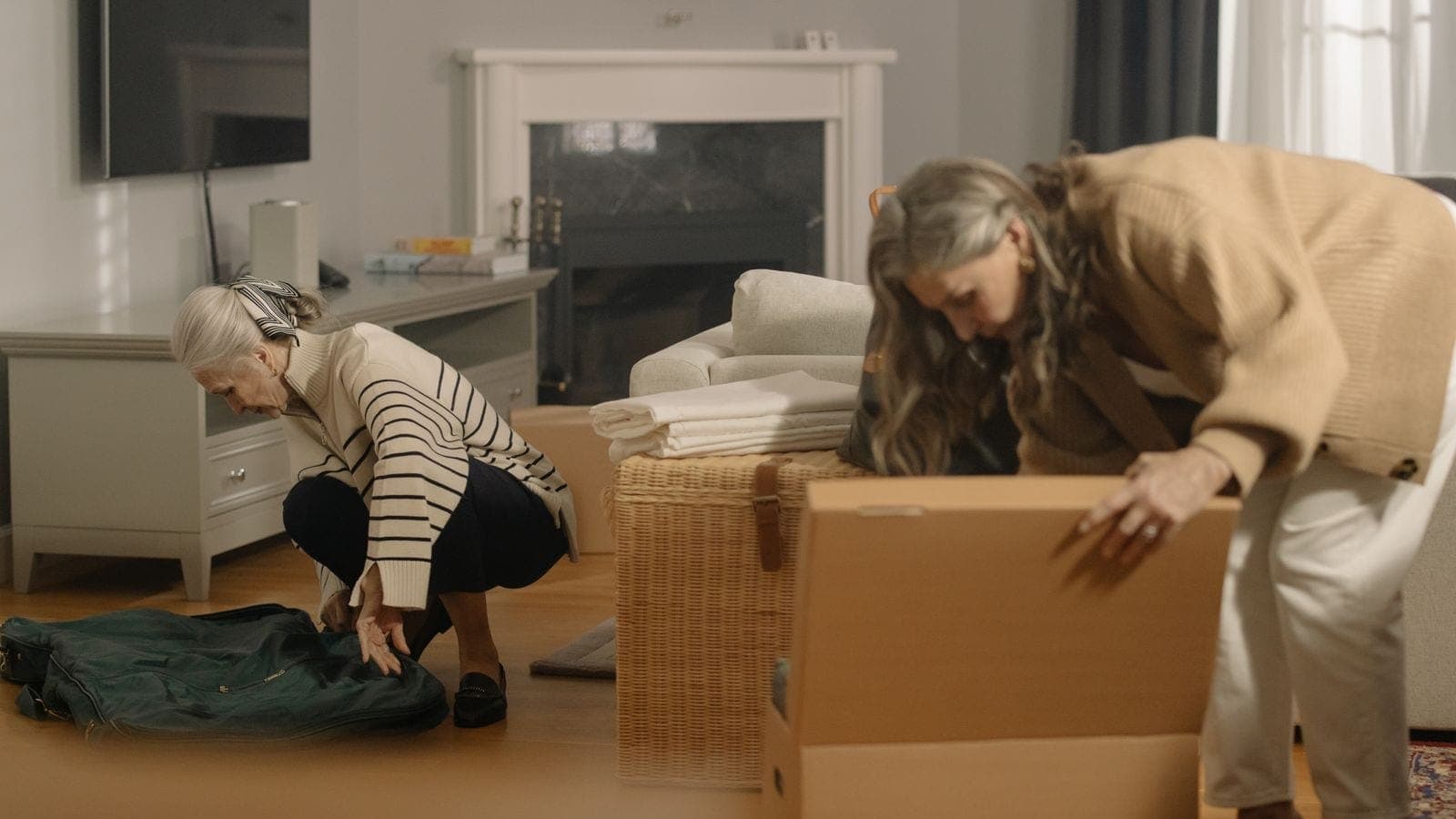
Helping a parent or grandparent move out of the family home is rarely just a logistics problem. There are decades of belongings to sort, decisions that carry real emotion, and a person who deserves to feel calm rather than rushed. We have handled hundreds of these moves across the Denver metro since 2010, and the pattern is always the same: a slower pace and a clear plan make all the difference. This guide walks through how senior moving services Denver families actually use should work, from the first downsizing conversation to the moment the bed is made in the new place. We cover timelines, donation pickups, winter safety on icy steps, choosing a mover who has done this before, and what it really costs. Throughout, we share how our crews handle the small details that protect both the belongings and the person at the center of the move.
Table of Contents
What Makes a Senior Move Different
A senior move is rarely a same-week dash across town. It usually involves leaving a long-held home, fitting a lifetime of belongings into a smaller footprint, and doing it at a pace that respects the person, not the truck schedule. The home may have stairs, a basement full of stored items, or furniture that has not moved in twenty years. The right approach treats sorting and emotion as part of the job, not a delay. That is the heart of what good senior moving services Denver providers offer, and it is how our crews work by default.
The mile-high detail: Denver sits at 5,280 feet, and the thin, dry air tires people out faster than they expect, especially anyone newer to altitude or managing a heart or lung condition. We pace move day around that reality. Plenty of water, seated rest breaks, and letting our crew carry the load rather than the family. There is no medal for pushing through. A calm move with three short breaks beats a fast one that leaves everyone wrung out.
- •Emotional weight: every item can carry a memory, so sorting takes longer and deserves patience
- •Physical limits: stairs, lifting, and altitude fatigue mean the family should supervise, not haul
- •Downsizing math: a 3-bedroom house rarely fits into a 1-bedroom apartment, so decisions come first
- •A real deadline: assisted living and 55+ communities often have firm move-in dates to hit
- •A soft landing: the new place should feel livable on night one, not like a wall of boxes
A Calm Planning Timeline (Start 6 to 8 Weeks Out)
The single biggest stress reducer is starting early. When sorting begins six to eight weeks before move day, donation pickups, selling, and packing all have room to breathe and never collapse into one frantic week. Rushing a senior through keep-or-donate decisions is where moves go sideways. A steady schedule, a few hours at a time, keeps everyone comfortable and gives nonprofits enough lead time to schedule their large-item pickups, which in Denver can run anywhere from a couple of days to two weeks out.
Six-Week Senior Move Countdown
- •6 to 8 weeks out: start keep, donate, sell, and gift sorting one room at a time
- •5 weeks out: measure the new space and make a simple floor plan so you know what fits
- •4 weeks out: book your movers and lock the date (peak summer dates fill first)
- •3 weeks out: schedule donation and large-item pickups with Denver nonprofits
- •2 weeks out: begin packing non-essentials, label boxes by room and priority
- •1 week out: pack an essentials bag with meds, chargers, documents, and a few comforts
- •Move day: crew handles the heavy work while family supervises and stays hydrated
If lifting a packing project feels like too much, that is exactly what add-on services are for. Our full packing and partial packing options let our crew box up the kitchen, the closets, or the whole house, so the family can focus on the keep-or-let-go decisions that actually need their input. You can see how packing and other add-ons work on our services and pricing pages, or just tell us what you would rather not touch and we will handle it.
Downsizing and Donations in Denver
Downsizing is the real work of most senior moves, and the goal is not to throw things away. It is to make sure the items that matter most travel to the new home and the rest find a good second life. We tell families to sort into four simple piles: keep, donate, sell, and gift to family. Building that sort into the timeline early means you never have to make rushed calls under pressure, and you avoid paying us to move boxes that were always headed for donation anyway.
Free pickups make it easier: several Denver nonprofits will come to the house for large furniture, so a sofa or dresser does not have to ride in the truck. Habitat for Humanity ReStore and Arc Thrift both offer scheduled large-item pickup, and Goodwill and Salvation Army take drop-offs across the metro. Items need to be clean and in working order, and donations to qualifying nonprofits are tax-deductible, so keep an itemized receipt. Just remember the lead times. Some pickups book a few days out, others closer to two weeks.
- •Keep: items that fit the new floor plan and genuinely earn their space
- •Donate: clean, working furniture and goods for Habitat ReStore, Arc, Goodwill, or Salvation Army
- •Sell: higher-value pieces through consignment or online listings, started early so they actually sell
- •Gift: the heirlooms and meaningful pieces family members want to take home
- •Documents box: medical, legal, and financial papers that travel with the person, not the truck
A note on the dry air: Denver's low humidity is hard on wood furniture, instruments, and houseplants, and pieces that survived decades in a humid climate can crack here. If there is a gap between selling the old home and moving into the new one, climate-controlled storage protects those items from warping. Our storage pickup add-on can bridge that staging gap so nothing sits in a hot garage waiting on the new place to be ready.
Choosing a Senior-Friendly Mover
Not every moving crew is suited to a senior move, and the difference shows on the hard days. You want movers who slow down, communicate clearly, and treat a parent the way they would treat their own. Experience with downsizing moves matters, and so does the boring paperwork that protects you. In Colorado, household-goods movers must hold a PUC permit, carry proper liability and cargo coverage, and display their company name and PUC number on the truck. We are fully licensed and insured, and we are glad to share those details before you book.
Questions to Ask Any Senior Mover
- •How much senior-move experience do you have? Downsizing and assisted-living moves are their own skill
- •Are you licensed and insured in Colorado? Ask for the PUC permit number and proof of coverage
- •Will I get a written estimate? Colorado requires written binding or not-to-exceed estimates, never phone-only guesses
- •How is the deposit handled? Be cautious of cash-only or wire-only deposits, or pressure to prepay a large amount with no written estimate
- •Who is on the crew? You want trained, background-checked movers, not day-labor
- •How do you handle stairs and tight spaces? A clear plan beats improvising on move day
A few red flags worth knowing: Colorado law prohibits movers from holding belongings hostage over a disputed bill, so any threat like that is a serious warning sign. Be wary of a company name that mimics a well-known brand, a missing PUC number, or pressure to pay a large deposit in cash. You can verify any mover's record through the BBB and the FMCSA, and the Colorado PUC Consumer Line (303-894-2070) handles complaints on intrastate moves. We would rather you ask these questions of everyone you call, including us. Our 102 five-star Google reviews and 7,000-plus completed moves are there precisely so you can check our work.
Move-Day Safety and Gentle Support
Move day for a senior should feel supervised, not strenuous. The family's job is to make decisions and stay comfortable while our crew handles every box, every staircase, and every awkward piece of furniture. We set up a quiet landing room first at the new place, the bed, the bathroom essentials, medications, and a chair, so the person has a calm spot to settle into while the rest of the unloading happens around them. That one habit takes the overwhelm out of arrival day more than anything else.
Winter moves take extra care. Denver gets roughly 57 inches of snow a year, and March is actually the snowiest month, but storms here tend to be short and melt fast, so winter move days are usually workable with planning. The risk is ice underfoot. Before our crew arrives, we want walkways and steps clear and de-iced, sturdy handrails available, and paths well lit. We use slip-resistant footwear and salt the path as needed. For a senior, a fall on an icy step is the real danger, far more than a few flakes in the forecast.
Winter Move-Day Safety Checklist
- •Clear and de-ice every walkway, step, and landing before the crew arrives
- •Make sure both sets of stairs have sturdy, two-handed handrails
- •Keep the senior indoors and warm while loading happens, away from icy paths
- •Light all paths well, especially with Denver's early winter sunsets
- •Set up the landing room first: bed, meds, bathroom essentials, and a place to sit
- •Keep water and snacks handy and build in real rest breaks
If the new home needs accessibility work, arrange it before move-in rather than after. Wheelchair ramps and stairlifts can usually be installed within a few days, and it is far easier to position furniture once that hardware is in place. Tell us about ramps, walkers, or tight doorways ahead of time and we will plan the furniture placement around how the person actually moves through the space.
Where Denver Seniors Are Rightsizing
The Denver metro has a wide range of options for rightsizing, from 55+ rental communities to deed-restricted ownership neighborhoods to full life-plan campuses with continuing care. Littleton and Lakewood are perennial favorites, with walkable older-town cores and established senior communities. Suburbs like Aurora, Arvada, Centennial, Highlands Ranch, and Parker all have strong 55+ options too. We serve every one of these areas, plus the full Front Range and long-distance moves to all 50 states, so wherever the next chapter is, our crews can get there.
Independent Living vs. 55+ Rental: A Quick Comparison
Advantages
- •Independent living bundles meals, housekeeping, and social activities into one monthly cost
- •Built-in community and on-site staff ease isolation and day-to-day chores
- •Life-plan campuses can add care later without another full move
- •Less home upkeep, which suits anyone tired of yard work and repairs
Considerations
- •Independent living runs higher, often around $4,500 to $4,800 a month in the Denver metro
- •55+ rentals are cheaper, roughly $1,500 to $2,500 a month, but you handle your own meals and care
- •Rentals offer more independence but fewer built-in services and less on-site support
- •Either way, the smaller square footage means downsizing is unavoidable, so plan the sort early
Whichever direction the move goes, the floor plan should drive the downsizing, not the other way around. Measure the new unit, sketch where the keeper furniture lands, and let that picture decide what comes along. You can see every neighborhood and suburb we cover on our areas we serve page, and if you are moving a senior out of the metro entirely, ask us about long-distance planning when you reach out.
What a Senior Move Costs With ELM
We keep pricing simple and there are no hidden fees. Your base price is set by home size: $199 for a studio or one-bedroom, $349 for a two-bedroom, $449 for a three-bedroom, and $649 for four bedrooms or more. Distance is $1.50 per mile beyond the first 10 miles, which covers most moves within the metro with room to spare. To book, we take a 50 percent deposit and the balance is due on move day. You will see the full number before you commit, never a surprise at the end.
Add-ons cover the senior-move specifics. Full or partial packing, furniture disassembly and reassembly, piano and specialty handling, storage pickup for a staging gap, box delivery, and packing supplies are all available, so you only pay for the help you actually want. For a downsizing move, families most often add packing and furniture handling, since those are the tasks that are hardest on aging hands and backs. Tell us what you would rather not do yourself and we will build the quote around it.
On timing and savings: peak summer rates across Denver run noticeably higher than fall and winter, and mid-month weekdays beat month-end weekends for both price and availability. A senior move scheduled for, say, a Tuesday in October often costs less and books more easily than a late-June Saturday. If your move-in date has any flexibility, that flexibility is money. The fastest way to a real number is our booking quote, or call us at (720) 241-3615 and we will walk through it with you. We are available 24/7, and after 15-plus years and 7,000-plus moves, there is very little we have not seen.
Frequently Asked Questions
What are senior moving services in Denver and how do they work?
Senior moving services in Denver are relocation services tailored to older adults, covering downsizing help, careful packing, gentle move-day support, and setup in the new home. At Exquisite Logistics Moving, we move at the senior's pace, handle all the heavy lifting and stairs, and set up a calm landing room first so arrival day is not overwhelming. We have run these moves across the metro since 2010 and are fully licensed and insured. Call (720) 241-3615 or request a booking quote to get started.
How much does it cost to move a senior in the Denver area?
Our pricing is based on home size: $199 for a studio or one-bedroom, $349 for a two-bedroom, $449 for a three-bedroom, and $649 for four-plus bedrooms, with no hidden fees. Distance is $1.50 per mile beyond the first 10 miles, and a 50 percent deposit books the date with the balance due on move day. Add-ons like packing and furniture disassembly are priced separately so you only pay for the help you need. Booking a mid-month weekday in fall or winter usually costs less than a summer weekend.
How far in advance should I plan a senior or downsizing move?
Start the keep, donate, and sell sorting about six to eight weeks before move day. That window gives Denver donation nonprofits enough lead time to schedule large-item pickups (anywhere from a few days to two weeks out) and keeps packing from collapsing into one stressful week. Book your movers around four weeks out, and earlier if you are moving during the June to August peak season when dates fill fast.
Can you move a senior safely during a Denver winter?
Yes. Denver storms are usually short and melt quickly, so winter move days are typically workable with planning, and winter rates and availability are better than summer. The main risk is ice, so we ask that walkways and steps be cleared and de-iced, handrails be available, and paths be well lit before the crew arrives. We keep the senior indoors and warm while we handle the loading on slick surfaces.
What should I look for when choosing a senior-friendly mover in Colorado?
Look for experience with downsizing and assisted-living moves, a valid Colorado PUC permit, full liability and cargo insurance, and a written binding or not-to-exceed estimate rather than a phone-only quote. Avoid movers who demand large cash deposits, lack a PUC number, or use a name that mimics a known brand, and verify any company through the BBB and FMCSA. Exquisite Logistics Moving is licensed and insured with 102 five-star Google reviews and 7,000-plus completed moves.
Does Exquisite Logistics Moving help with packing and downsizing for seniors?
Yes. We offer full and partial packing, furniture disassembly and reassembly, piano and specialty handling, and storage pickup to bridge a gap between homes, all as add-ons so you only pay for what you need. For downsizing moves, families most often add packing and furniture handling since those tasks are hardest on aging hands and backs. Tell us what you would rather not do yourself at (720) 241-3615 and we will build the quote around it.