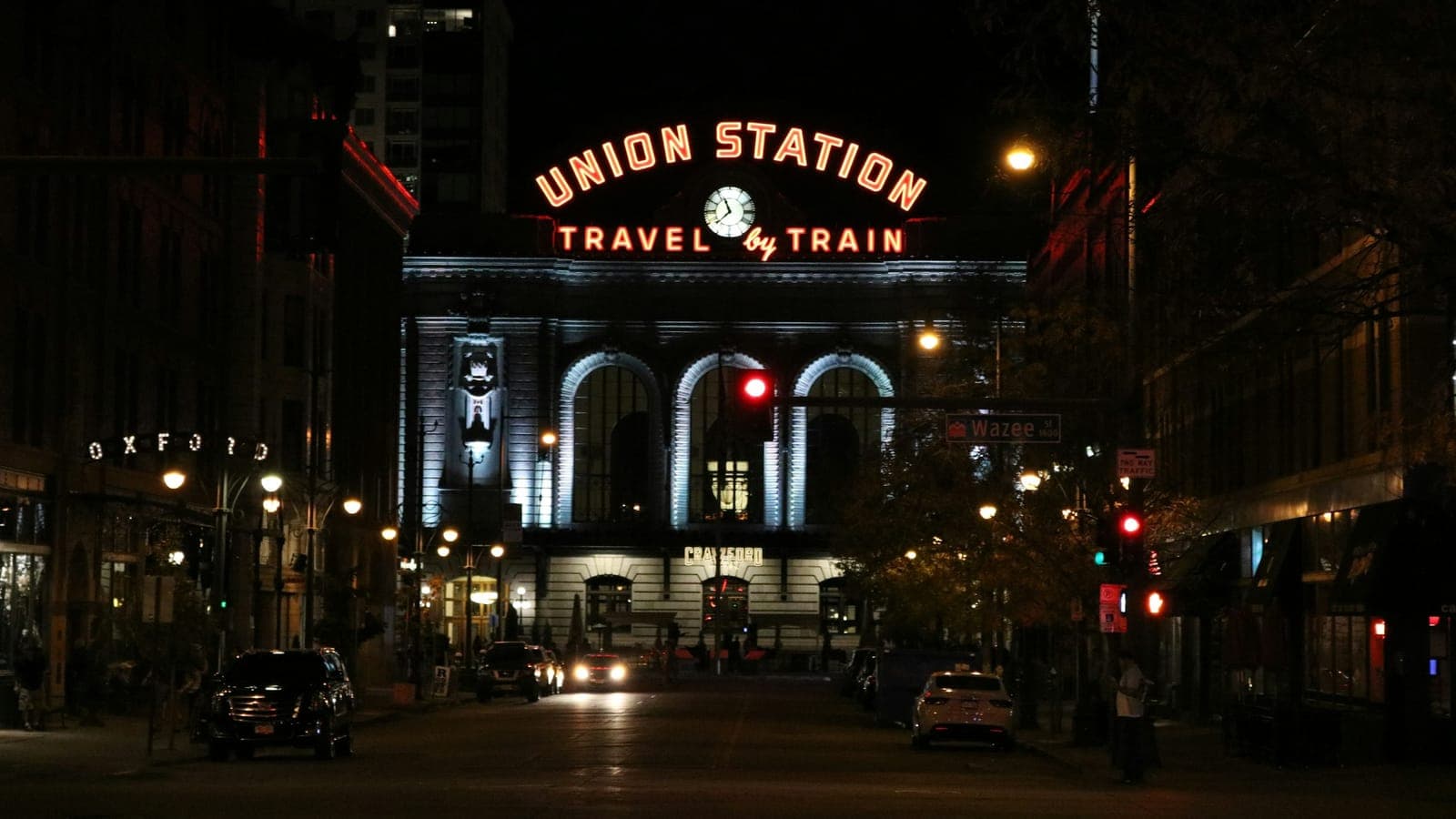
We've loaded a lot of trucks bound out of New York walk-ups and co-op buildings, and the move to Denver is one we know cold. Moving from New York to Denver means crossing roughly 1,780 miles, swapping a $3,000 one-bedroom for something far easier on the wallet, and trading humid summers for about 300 days of sunshine at 5,280 feet. It's a great trade for most people, but the logistics surprise folks: NYC buildings have their own move-out rules, interstate transit isn't same-day, and the altitude can flatten you in week one. We're a family-run Denver company with 15-plus years and more than 7,000 moves behind us, so this guide walks the whole route, from the cost ranges to the paperwork waiting for you in Colorado. Call us anytime at (720) 241-3615 if you'd rather just talk it through.
Table of Contents
- What Moving from New York to Denver Actually Costs
- The New York Side: COIs, Elevators, and Parking
- How Long the Move Takes and Why
- How to Verify a Licensed Interstate Mover
- Your Money Goes Further in Denver
- From Apartment to House: The Denver Housing Jump
- Adjusting to Altitude and the Mile High Climate
- Ready to Move? Here's Your Next Step
- Frequently Asked Questions
What Moving from New York to Denver Actually Costs
Cost is the first question almost everyone asks, and the honest answer depends on three things: how much you're bringing, the service level you choose, and when you move. A full-service interstate move from New York to Denver commonly lands somewhere around $2,600 to $7,400, with smaller and larger homes falling outside that band. A light one-bedroom can run roughly $1,900 to $3,000, a two-bedroom around $3,750 to $6,250, and a four-bedroom or larger often $5,200 to $8,500 and up. Packing, crating, and assembly add-ons push the final number higher.
Our pricing, in plain numbers: ELM charges a flat base by home size, then a simple distance rate, with no hidden fees stacked on top. A studio or one-bedroom starts at $449, a two-bedroom at $749, a three-bedroom at $949, and four or more bedrooms at custom pricing. Distance is $1.50 per mile beyond the first 15 miles. You reserve your date with a 50% deposit and pay the balance on move day. Add-ons like full or partial packing, piano and specialty handling, and disassembly are quoted up front so nothing surprises you.
- •One-bedroom, NYC to Denver: roughly $1,900 to $3,000 depending on service level
- •Two-bedroom: roughly $3,750 to $6,250
- •Four-bedroom or larger: roughly $5,200 to $8,500 and up
- •Full or partial packing add-on: doing it yourself can save hundreds to a few thousand
- •Self-move container option: usually cheaper than full-service, but you supply the labor and wait weeks for delivery
- •Summer premium: mid-May through August is the busiest, priciest window
How to keep your NYC-to-Denver move affordable
- •Purge before you pay, since weight and volume drive long-distance pricing
- •Pack the boxes yourself and let our crews handle the heavy, awkward, and fragile pieces
- •Move mid-month on a Tuesday or Wednesday for the easiest scheduling
- •Avoid the mid-May through August peak if your dates are flexible
- •Get the quote in writing, never a single number over the phone
- •Start your free online quote on our site for an instant price by home size
The New York Side: COIs, Elevators, and Parking
The hardest part of this move usually happens before the truck leaves New York. Most co-op, condo, and managed rental buildings (call it 90% of them) require a Certificate of Insurance, or COI, naming the building as additional insured. Management typically wants it submitted at least 72 hours ahead, and they won't let the crew through the door without it. Walk-ups rarely ask for one. We handle COIs all the time, so send us your building's requirements early and we'll get the paperwork over to your property manager before move day.
Buildings with freight elevators almost always require a reservation, and popular move slots get claimed two to three weeks out. Book yours as soon as you have a date. On the street side, many Manhattan and brownstone blocks need a posted temporary parking permit so the truck has a legal spot near the door. Without it, crews carry your couch an extra half block, and that long carry shows up as labor time. Narrow pre-war staircases often force furniture disassembly too, which is exactly the kind of thing we plan for in advance.
Your NYC move-out checklist
- •Ask your building for its COI requirements and submit at least 72 hours ahead
- •Reserve the freight elevator two to three weeks before your date
- •Confirm move-in and move-out hours, since many buildings restrict weekends
- •Apply for a temporary parking permit if your block requires one
- •Flag narrow staircases or tight doorways so we plan disassembly upfront
- •Confirm your Denver building's rules too, if you're landing in a high-rise downtown
How Long the Move Takes and Why
New York to Denver is about 1,780 miles, usually routed across I-80, which is roughly 26 hours of nonstop driving. Nobody does it nonstop, and your belongings don't either. How fast your shipment arrives comes down to whether you choose a shared load or a dedicated truck, and that choice trades money against speed.
Shared load vs. dedicated truck
Advantages
- •Shared load: lower price since you split the trailer with other shipments
- •Shared load: the standard, budget-friendly choice for most one and two-bedroom moves
- •Dedicated truck: your goods are the only load, so delivery is faster and tighter
- •Dedicated truck: a realistic 3 to 4 day window on a haul this long
Considerations
- •Shared load: a wider delivery window, often 5 to 10 business days door to door
- •Shared load: your exact delivery day is a range, not a guarantee
- •Dedicated truck: a higher price for the exclusivity
- •Both: mid-May through August peak season can add several days on top
Plan for that delivery window when you book travel and time off. If you're flying ahead to Denver, pack a separate essentials bag of clothes, toiletries, chargers, and anything you can't be without for a week. We'll give you a realistic delivery range up front and keep you updated while your shipment is on the road, so you're never guessing where your stuff is.
How to Verify a Licensed Interstate Mover
This is where people get burned, so it's worth ten minutes of your time. Every legitimate interstate mover must hold an active USDOT number plus FMCSA household-goods operating authority. You can verify both for free at safer.fmcsa.dot.gov and look for an Active status. Any company offering to move you across state lines without a USDOT number is likely operating illegally, and that's an immediate walk-away.
Colorado adds its own layer for moves that start and end in state. The Colorado Public Utilities Commission requires a Household Goods permit, written as an HHG number, verifiable at puc.colorado.gov or through PUC Consumer Affairs at 303-894-2070. A general property or freight permit does not cover your furniture. For your interstate move from New York, the USDOT and FMCSA authority is what matters most, and a real mover shares those credentials without hesitation.
Verify any mover before you put money down
- •Confirm an active USDOT number and household-goods authority at safer.fmcsa.dot.gov
- •Treat the lack of a USDOT number as a deal-breaker for any interstate move
- •For in-state Colorado moves, confirm a PUC HHG permit number
- •Check that the licensed name matches the name on your written estimate
- •Read recent reviews across more than one platform, not just a single page
- •Walk away from any rushed, cash-only deposit demand
Where ELM stands: we're a family-run Denver company that's been doing this since 2010, fully licensed and insured, with more than 7,000 completed moves behind us. Our 102 five-star Google reviews and 35-plus Thumbtack reviews add up to a perfect 5.0 rating, and we're glad to hand over our credentials before you ever leave a deposit. Our team picks up the phone 24/7 at (720) 241-3615, and you can start a free quote online anytime.
Your Money Goes Further in Denver
This is the part newcomers enjoy. Denver's overall cost of living runs roughly 27% to 34% lower than New York City's, depending on which index you use. Rent is the headline. A one-bedroom in Denver typically runs around $1,500 to $1,800 a month versus roughly $3,000 in NYC. Denver rents have actually been cooling a little, with the median dipping a few percent year over year to somewhere near $1,700. Average monthly utilities land around $145, below the national average.
- •One-bedroom rent: roughly $1,500 to $1,800 in Denver vs. about $3,000 in NYC
- •Overall cost of living: roughly 27% to 34% lower than New York City
- •Average monthly utilities: about $145, below the national average
- •Salaries: Denver averages roughly 11% to 12% lower than NYC, which offsets some of the savings
- •No subway, more car: budget for vehicle costs you may have skipped in the city
- •Verify current figures when you shop, since rents and prices shift by season
Two caveats keep this honest. Denver salaries average a bit lower than New York's, so the raw take-home picture isn't a pure win even if your monthly costs drop. And many New Yorkers go car-free, while Denver mostly runs on driving, so factor a vehicle, insurance, and parking into the math. Even with those adjustments, the typical household relocating from NYC ends up with noticeably more breathing room each month.
From Apartment to House: The Denver Housing Jump
Plenty of our New York customers come here specifically to trade an apartment for a house with a yard, and Denver makes that achievable in a way the five boroughs rarely do. As a rough gauge, Metro Denver's median home price has hovered in the low-to-mid $600,000s, with detached single-family homes running into the high $600,000s and condos and townhomes landing closer to the high $300,000s to low $400,000s. Those are ballpark figures and the market shifts, so check current listings before you budget. Either way it's well above the national median, but for a buyer coming from NYC pricing, the leap from renter to homeowner is realistic.
- •LoDo, RiNo, and Five Points: walkable, transit-friendly, closest to that downtown energy
- •Highlands and LoHi: rooftops, restaurants, and trendy blocks that draw young professionals
- •Wash Park, Cherry Creek, and Cap Hill: established central neighborhoods with character and parks
- •Baker and Central Park: a mix of historic charm and master-planned space with strong schools
- •Aurora, Lakewood, and Arvada: more square footage and yard for the money, easy metro commute
- •Highlands Ranch, Littleton, Parker, and Centennial: south-metro suburbs families gravitate toward
Wherever you land, our crews know these streets, the parking quirks, and the tight historic staircases in neighborhoods like Cap Hill and Baker. We serve the full Denver metro, every city from Boulder and Golden to Castle Rock and Thornton, and all of Colorado. If your new place is a downtown high-rise, confirm its move-in rules early, since some buildings here have elevator reservations and COI requirements that look a lot like the ones you just dealt with in New York.
Adjusting to Altitude and the Mile High Climate
Denver sits at exactly 5,280 feet, a full mile above the sea-level air you're used to in New York. Most newcomers acclimate in about one to three days, but that first stretch can bring headaches, fatigue, and trouble sleeping. The fix is simple. Drink roughly double your usual water, ease off the alcohol the first few nights, and don't book a hard hike or a ski day before your body has caught up. Sunscreen goes on year-round up here, since there's noticeably less natural protection at altitude.
The climate is a sharp contrast to a humid New York summer. Denver is semi-arid and low-humidity, with around 300 days of sunshine a year by the local marketing count. It does snow, averaging about 57 inches a year, but the sun melts it off fast and the city rarely stays buried the way the Rockies do. March is the snowiest month, so keep a good coat handy into early spring. We move year-round and run 24/7, so a sunny 50-degree winter afternoon is a perfectly normal move day here.
Your first week at altitude
- •Double your water intake and go easy on alcohol and caffeine early on
- •Unpack sunscreen, sunglasses, lip balm, and layers first
- •Hold off on strenuous hiking or skiing for the first few days
- •Expect dry skin and dry sinuses, so a humidifier helps
- •Pack for layers, not seasons, since a 30-degree morning can hit shirt-sleeve weather by afternoon
- •Keep a warm coat accessible into March, the snowiest month
Ready to Move? Here's Your Next Step
Once your dates and your new neighborhood are set, the move itself is the part we handle. ELM is a family-run, fully licensed and insured Denver company with 15-plus years, more than 7,000 moves, a perfect 5.0 rating, and crews available 24/7. We cover long-distance moves to all 50 states, including the full New York to Denver route, with full and partial packing, furniture disassembly and reassembly, piano and specialty handling, storage pickup, and box delivery available as add-ons. Payment runs securely through QuickBooks, and a 50% deposit locks your date.
Get your New York to Denver move on the calendar
- •Start your free quote online for an instant price by home size
- •Review every flat rate and add-on on our pricing page
- •Send us your NYC building's COI and elevator requirements so we prep them early
- •Reserve your date with a 50% deposit, balance due on move day
- •Prefer to talk it through? Call or text us anytime at (720) 241-3615
Whether you're leaving a fifth-floor walk-up in Brooklyn or a doorman building on the Upper West Side, we'll give you a clear price, a licensed crew, and a delivery window you can plan around. Grab a free quote on the site, or call us and we'll build the plan with you. Welcome to Denver, and welcome to the neighborhood.
Frequently Asked Questions
How much does moving from New York to Denver cost?
A full-service interstate move from New York to Denver commonly runs about $2,600 to $7,400, depending on home size and services. A light one-bedroom can fall around $1,900 to $3,000, while a four-bedroom or larger often runs $5,200 to $8,500 and up. Packing and crating add-ons raise the total. For a clear price, start a free quote on our site or call (720) 241-3615.
How long does it take for my belongings to arrive in Denver?
It depends on whether you choose a shared load or a dedicated truck. A shared (consolidated) load usually delivers within a 5 to 10 business day window door to door, since the trailer carries multiple shipments. A dedicated truck cuts that to roughly 3 to 4 days at a higher price. Mid-May through August peak season can add several days on top, so plan an essentials bag for the gap.
Do I need a Certificate of Insurance to move out of my NYC building?
Most likely, yes. Around 90% of co-op, condo, and managed rental buildings in New York require a Certificate of Insurance (COI) naming the building as additional insured, usually submitted at least 72 hours before move day. Walk-ups rarely require one. Send us your building's requirements early and we'll get the COI to your property manager before the crew arrives.
How do I make sure a New York to Denver mover is licensed?
For an interstate move, confirm the company holds an active USDOT number plus FMCSA household-goods operating authority, both verifiable free at safer.fmcsa.dot.gov. Any company offering interstate service without a USDOT number is likely operating illegally. Exquisite Logistics Moving is fully licensed and insured for all 50 states and shares credentials before any deposit.
Is Denver cheaper to live in than New York City?
For most households, yes. Denver's overall cost of living runs roughly 27% to 34% lower than NYC, with one-bedroom rent around $1,500 to $1,800 versus about $3,000 in New York. Keep in mind Denver salaries average a bit lower, and you'll likely need a car here, so factor both into your budget. Verify current figures when you shop, since the market shifts.
What deposit do I need to book my move with ELM?
A 50% deposit reserves your moving date, and the balance is due on move day. Payment runs securely through QuickBooks, so you can pay by card. There are no hidden fees beyond the flat base price, the $1.50 per mile distance charge after the first 15 miles, and any add-ons you choose, all quoted up front. Call (720) 241-3615 or book online to lock your date.